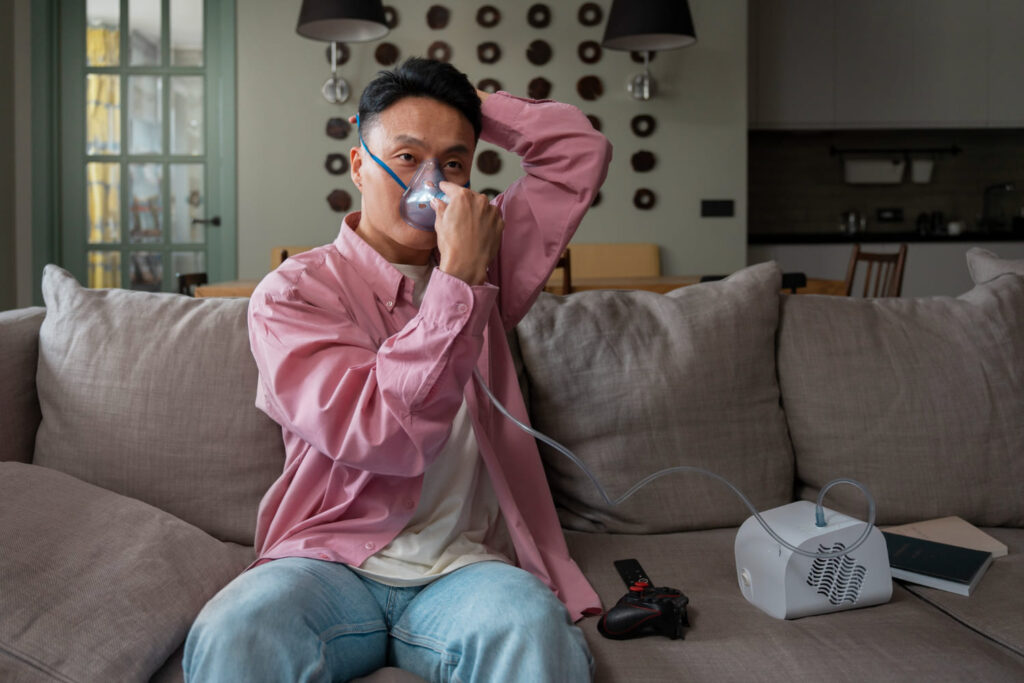
Why CPAP is Important ?
Untreated sleep apnea can lead to serious health issues such as high blood pressure, heart disease, stroke, diabetes, depression, and excessive daytime sleepiness. CPAP therapy addresses the root cause—airway obstruction—ensuring that your body receives enough oxygen throughout the night. By improving sleep quality, it can also enhance mood, concentration, and overall energy levels.
How CPAP Works
The CPAP machine draws in room air, filters it, and gently pressurizes it before delivering it through a hose connected to a mask worn over the nose, mouth, or both. This continuous flow of air acts as a splint, preventing the airway from collapsing and allowing you to breathe normally while sleeping.
Types of CPAP Masks
Nasal Mask – Covers only the nose; ideal for those who breathe primarily through their nose.
Nasal Pillow Mask – Lightweight option with soft inserts that rest at the nostrils.
Full-Face Mask – Covers both nose and mouth; suitable for mouth breathers or those with nasal congestion.
Overcoming CPAP Challenges
Some people find it difficult to adjust to wearing a mask at night. Common issues include mask leaks, dryness, or discomfort. These can often be solved by adjusting the fit, using mask liners, or trying a different mask style. Consistent use and gradual adaptation are key to success with CPAP therapy.
Schedule Your Appointment!
(443) 499-4005
Long-Term Health Impact of CPAP Use
Regular and consistent CPAP use doesn’t just improve nightly sleep—it can have profound long-term health benefits. Studies show that patients who adhere to CPAP therapy experience reduced risks of heart attack, stroke, and other cardiovascular problems. It can also improve insulin sensitivity in people with type 2 diabetes, support better weight management by improving metabolism, and reduce morning headaches caused by low nighttime oxygen levels.