Why POCUS-Lung is Important
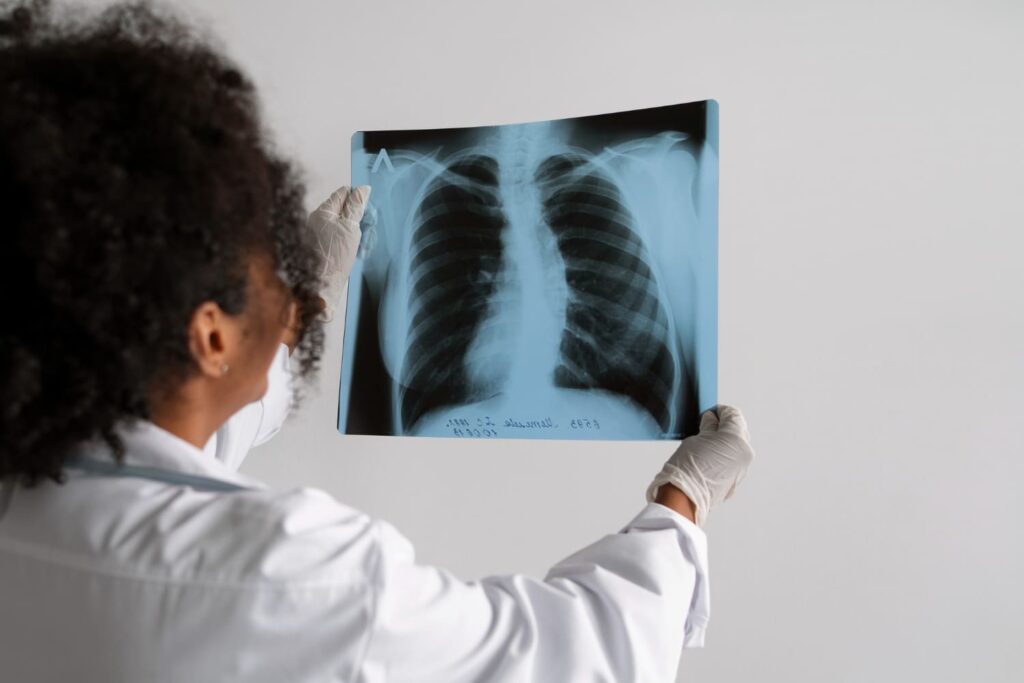
POCUS-Lung has transformed how respiratory conditions are evaluated in emergency, hospital, and clinic settings. It provides immediate insights into lung health, helping doctors detect fluid accumulation, collapsed lung tissue, infections, or other abnormalities quickly. For critically ill patients or those with limited mobility, this means faster diagnosis and treatment initiation, which can be lifesaving.
How the Procedure Works
The test uses a small handheld ultrasound probe placed on different areas of the chest wall. The probe emits sound waves that bounce off lung structures and create images on a screen. By analyzing specific ultrasound patterns—such as “B-lines” for fluid or “lung sliding” for pneumothorax—clinicians can determine the nature and severity of lung problems.
Conditions Detected with POCUS-Lung
Point-of-Care Ultrasound of the Lung can detect or help monitor:
Pneumonia (lung infection)
Pleural Effusion (fluid buildup around the lungs)
Pneumothorax (collapsed lung)
Pulmonary Edema (fluid in lung tissue, often from heart failure)
Lung Consolidation (areas of lung filled with fluid or pus)
Interstitial Syndrome (lung scarring or inflammation)
Advantages Over Traditional Imaging
One of the main benefits of POCUS-Lung is its speed and accessibility. While chest X-rays and CT scans require more time, transport, and exposure to radiation, POCUS can be performed immediately at the bedside, with no radiation exposure. It’s also cost-effective, repeatable, and can be used frequently to track changes in a patient’s condition over time.
Schedule Your Appointment!
(443) 499-4005
Role in Chronic Lung Disease Management
For patients with chronic respiratory illnesses such as COPD, interstitial lung disease, or heart failure, POCUS-Lung can be used during routine visits to monitor disease progression and treatment effectiveness. By identifying subtle changes early, it allows for timely adjustments to medications or therapies, reducing the risk of hospitalization.